Understanding Ground Conditions with In-Situ Testing in UAE
You can only see what’s on top of a house, bridge, or road. But the real strength of a building is what’s below it.
Engineers need to answer one important question before they can start building:
Is the ground strong enough to hold the building up?
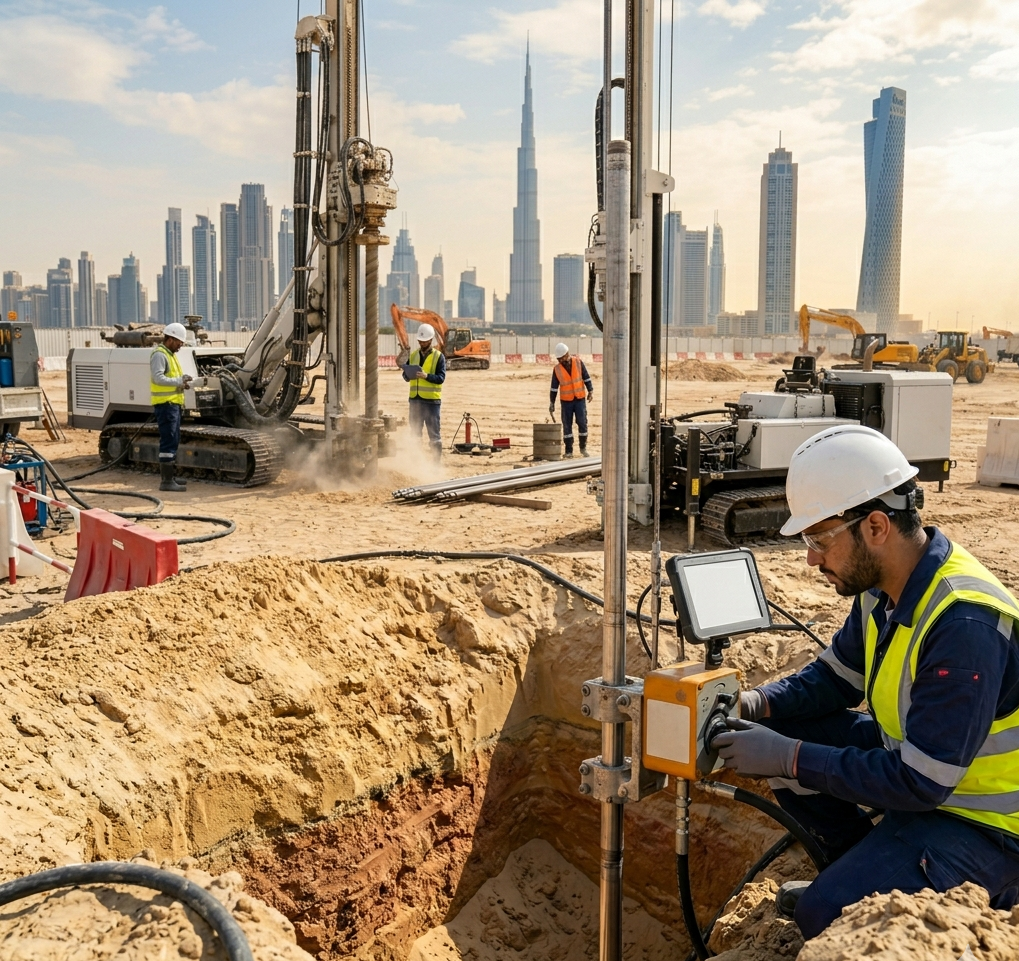
This is why in-situ research is so important. In its natural state, not in a lab, it helps experts figure out what the soil is really like at the spot.
How would you describe "in-situ testing" in simple terms?
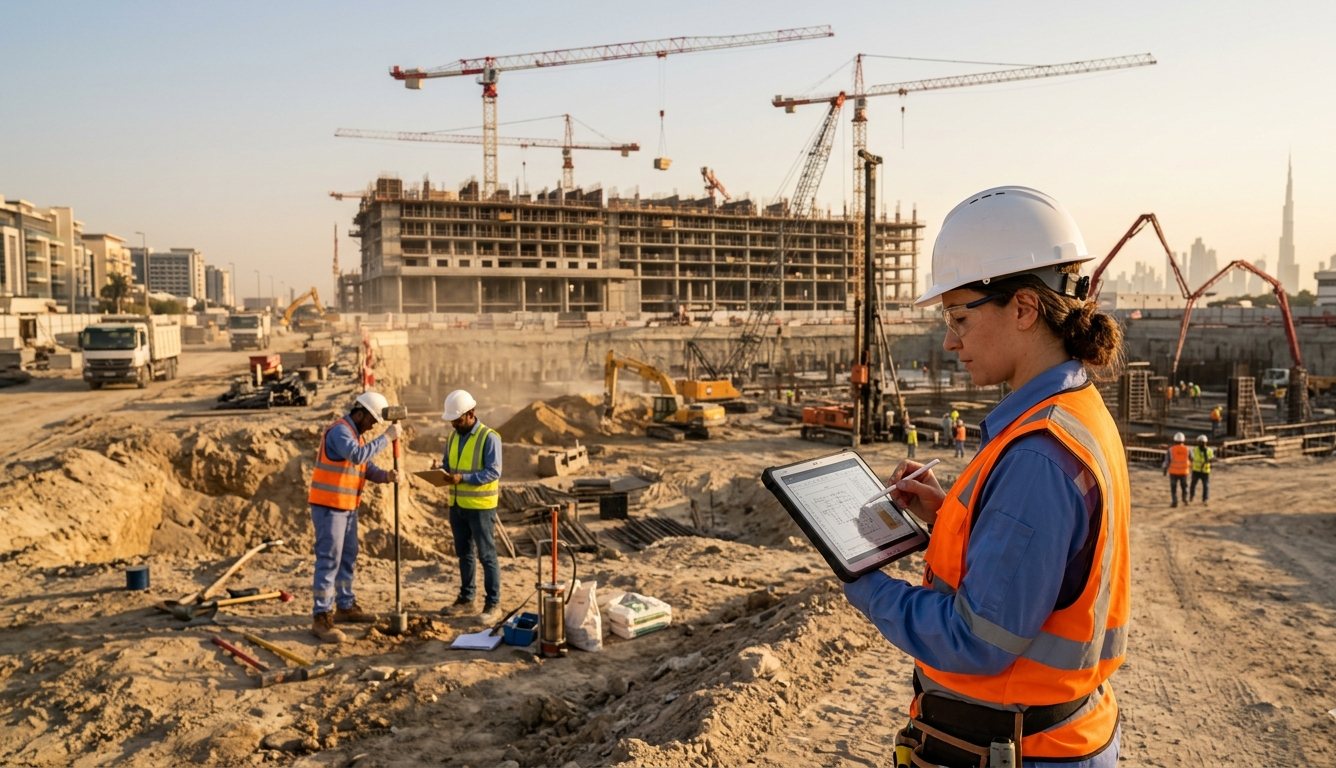
When you test the soil in-situ, you do it right there on the building site.
Engineers don’t take soil samples away and test them in a lab. Instead, they test the soil right where it is to get real, accurate results. It’s like checking the strength of a wall without breaking it. It’s quick, useful, and accurate.
Why is the state of the ground so important?
The ground is where everything you build starts. It can cause big problems down the road if it’s not checked properly.
If you don’t do the right tests, you could face:
Cracks in the walls
Uneven land settlement
Not strong bases
Problems with water
Repaired costs a lot
All of these risks can be avoided by learning about the dirt early on.
How test-in-place works in real projects
Testing that takes place underground gives engineers a clear picture of what’s going on below ground.
How Real Soil Acts
Because the soil is studied in its natural state, the results are more accurate and trustworthy.
Making choices more quickly
Since testing takes place on-site, engineers can quickly look at the data and make plans for the next step.
A better design for the foundation
The information helps build roots that are
Strong and stable
Fitting for the real ground
Finding problems early on
In-situ tests can find problems such as
Layers of weak dirt
A lot of groundwater
Not stable ground
It saves time and money to fix these early on.
Savings on costs
Testing correctly cuts down on mistakes, delays, and extra costs that aren’t needed during building.
Common Types of In-Situ Testing
These are some popular ways to do it:
Standard Penetration Test
Resistance is used to find out how hard or soft the dirt is.
The cone penetrating test (CPT) tells you a lot about the layers of dirt and how strong they are.
Test of Plate Load
Helps figure out how much weight the ground can safely hold.
Vane Shear Test
Used to find out how strong soft soils are.
Check the pressure
Look at what happens to the Earth when pressure is put on it.
Where is testing done in real life used?
For almost all building projects, in-situ testing is important:
Tall buildings and structures
The streets and roads
There are bridges and caves. buildings in the ocean and off the coast, Projects in industry
Tests on the ground are always the first step, no matter how big or small the project is.
Why Should You Hire Professional Testing Services?
To get accurate data, you need to:
Engineers with skills
New and improved tools
The right thinking
Testing by professionals makes sure that your project is:
Safe, follows the rules, and is based on solid data
Conclusion
What you don’t see is the most important thing in building.
In-situ testing lets you know about the conditions of the ground, which gives you the confidence to build. There are fewer risks, more savings, and long-term security because of it. For lack of a better phrase, strong homes begin with strong foundations.