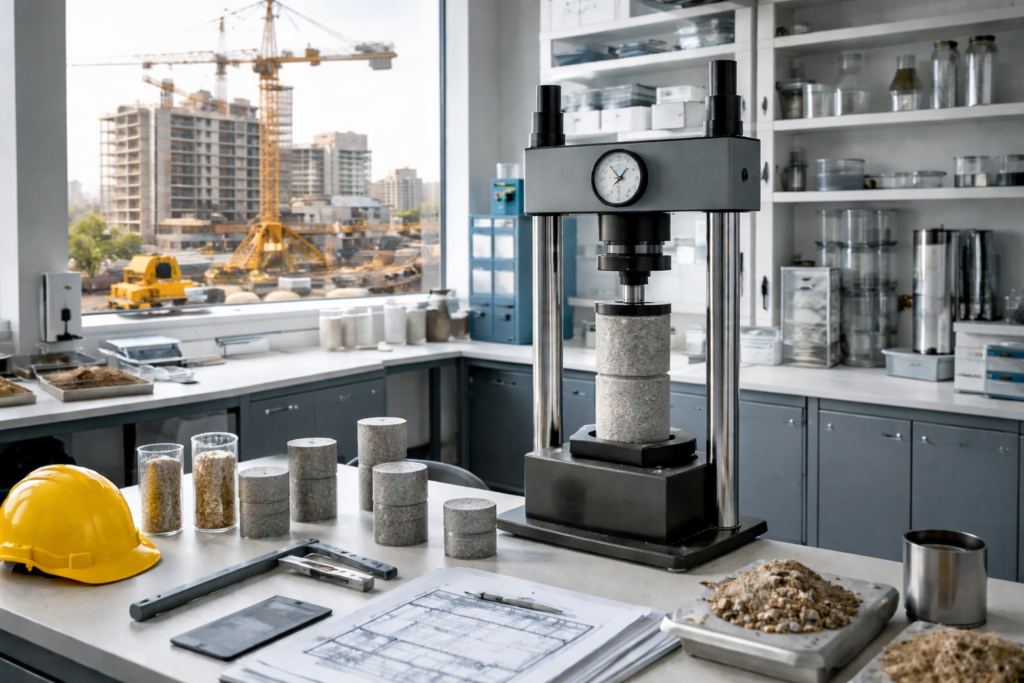
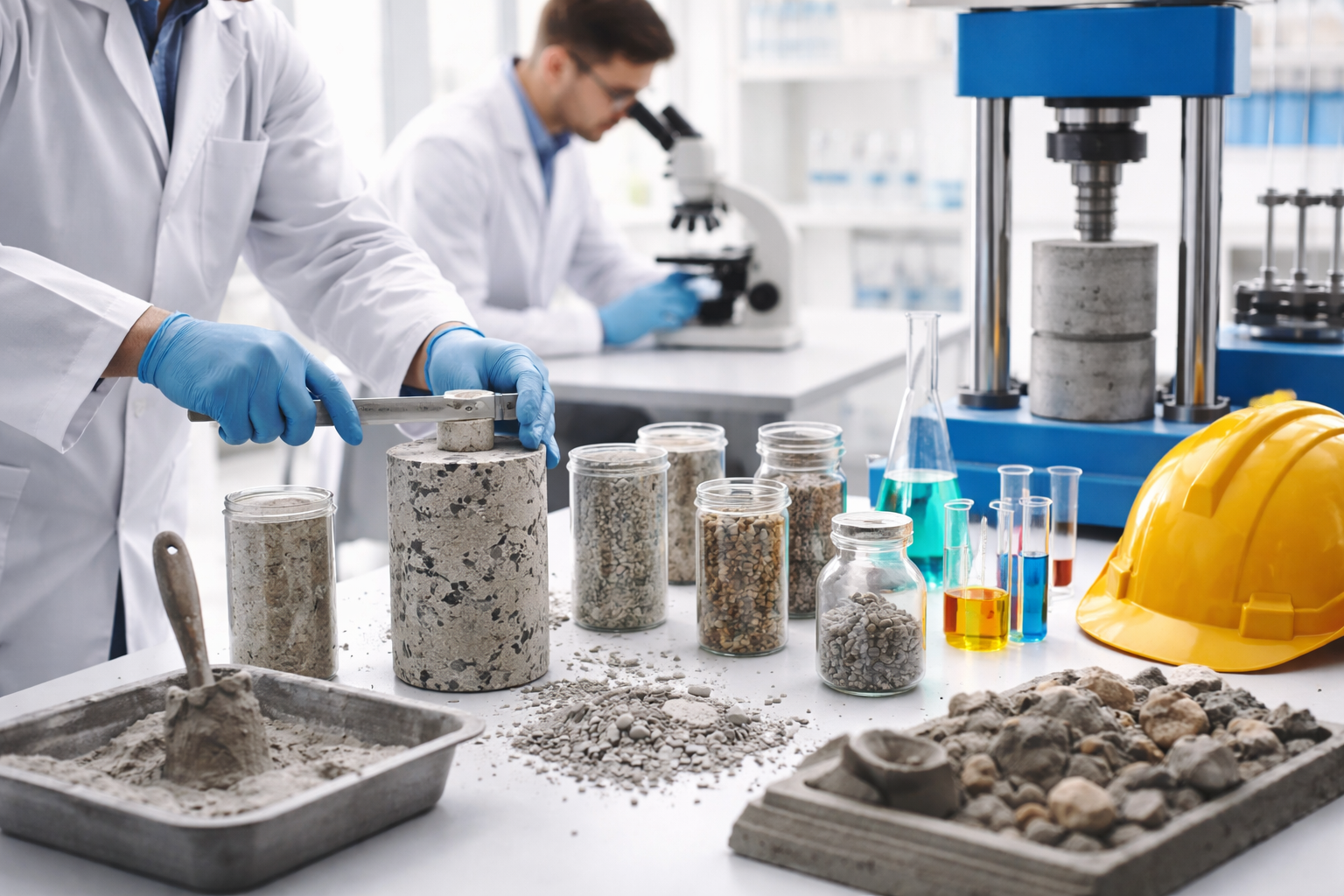
Everything seems solid and right when you look at a finished building. Most people don’t see how many tests are done before and during building, though.
Before building something strong, the materials are carefully tested in a lab to make sure they are safe.
How would you describe laboratory testing in easy terms?
It’s basically checking building supplies before they are used.
Lab tests are done on things like steel, concrete, soil, and aggregates to answer some easy but important questions:
Can this material hold its own weight?
Is it strong enough for this job?
How long will it last?
Everything is checked ahead of time so that no risks are taken on-site.
What does it matter?
Later problems will not happen as much.
When building something, small mistakes in the materials can become big problems. Bugs are easier and less expensive to fix when they are found early on through testing.
It makes sure the stuff is good.
Two products may look the same, but that doesn’t mean they work the same. Testing makes sure that the materials you’re using really do meet the guidelines.
It keeps the building safe.
Safety is the most important thing in the end. Everything that goes into a building, road, or bridge has to be able to handle real pressure, weather, and being used for a long time.
It saves money and time.
Nobody wants delays or extra work. Testing helps avoid failures that come up out of the blue, which speeds up work and keeps costs under control.
Builds last longer because of it.
If you use good products, you will have to fix things less often in the future. When you test something, you can be sure that it will still work well in the future.
What kind of tests are done most of the time?
There are different checks for each type of object, such as:
Strength tests are done on concrete.
The soil is tested to see if it can hold the building.
Durability and flexibility of steel are checked.
Both the size and quality of the aggregates are checked.
Nothing is used without first being checked out.
When do all of these tests take place?
It’s not just one time.
Before building , to accept materials
During construction, to make sure quality stays the same
After the building is done, to make sure everything works as planned
So material testing isn’t just the beginning; it’s part of the whole process.
Last thought
Testing in the lab is very important to the success of a project, even if it can’t be seen on-site.
It keeps people safe, raises the level of the work, and gives people faith that the building is done correctly.
It’s what makes a building project into a structure that is safe and lasts a long time. Contact Falcon Laboratory today.