Advances in Rubber Testing Improve Product Reliability
When a rubber part breaks at the wrong time, it can do a lot of harm. A little gasket leaking on an offshore platform, a hose breaking in the desert heat, or a rubber seal breaking within industrial machinery can all disrupt work, raise costs, and even put people in danger.
Companies use advanced rubber testing for this reason. It is the science that makes sure that all rubber products, no matter how big or tiny, work exactly as they should, even when the weather is bad.
We’ll explain what advanced rubber testing is, why it’s important, how it makes your products live longer, and how labs like Falcon Lab ensure rubber parts can handle intense heat, chemicals, pressure, and regular use in this post.
Let’s make it easy to understand and use.
Why rubber doesn't work well in tough conditions
Rubber is robust, flexible, and utilized a lot, yet it may also be affected by its surroundings. Rubber can start to break down when it is utilized outside, in factories, or in very hot or cold weather.
Here are some things that hostile conditions can do:
Heat can change the form of rubber or make it squishy.
It can get hard, brittle, and shatter easily when it’s cold.
Chemicals, fuels, and oils can make the material inflate or make it weaker.
Ozone and UV rays can cause rubber to crack and age faster.
It wears out slowly when it has to carry a lot of weight or move all the time.
Dust and sand can wear down or scratch surfaces.
All of this affects performance, safety, and lifespan. That’s why advanced Testing is so important; it helps you find problems before they happen.
What "advanced" rubber testing truly implies
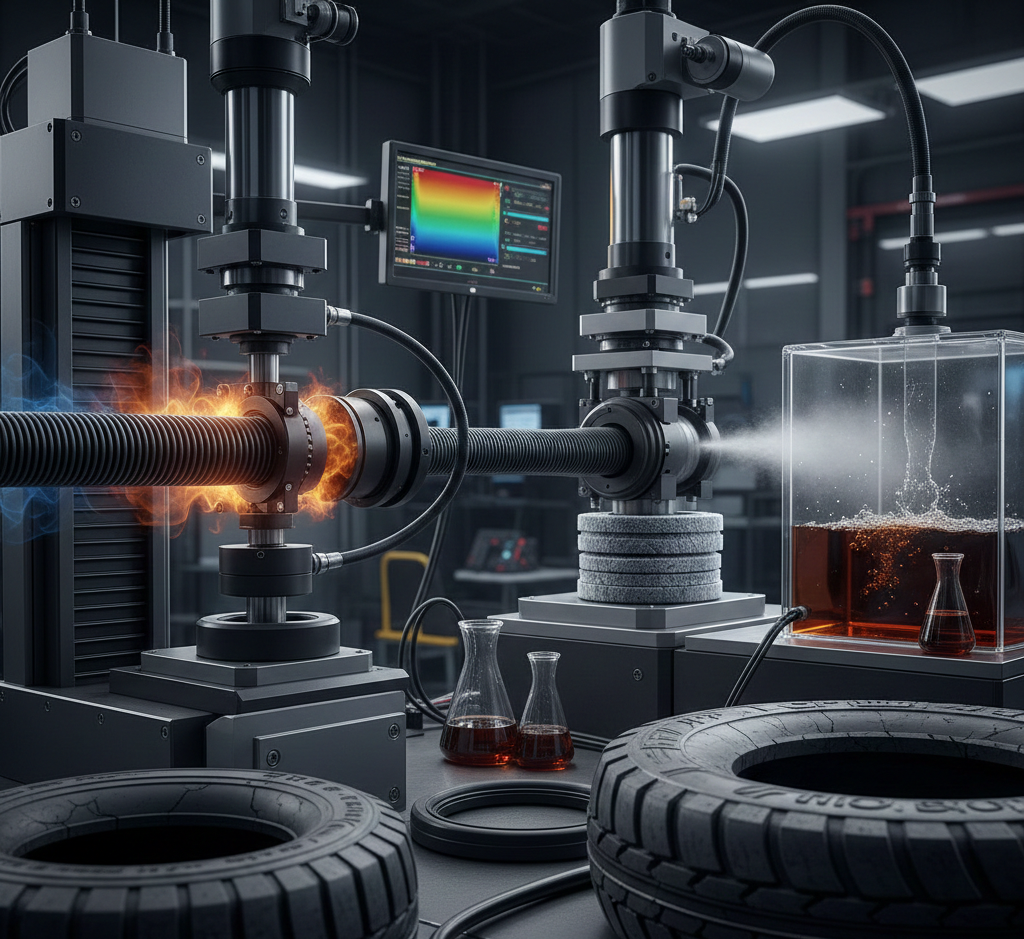
Basic Testing looks at fundamental factors like color or hardness. But advanced Testing goes beyond. It puts the rubber under stress to examine how it performs over time and recreates the same circumstances your product would face in real life.
You may call it a “future simulation” of your product.
Advanced Testing includes:
Exposure to high temperatures
Tests for brittleness at low temperatures
Aging from ozone and UV
Testing for resistance to chemicals
Tests for compression and relaxation
Wear and tear on machines
Wear and tear
Thermal cycling (going from hot to cold over and over)
Using lab tools for more in-depth analysis
These tests show you exactly how your rubber product will work in the real world.
Important tests, explained
These are several important exams, explained in simple terms:
Tests for heat and aging
For days or weeks, the rubber is kept in a hot room. It makes it look like it has aged naturally over years.
Why it matters: It reveals how long the product will last.
Tests for resistance to chemicals
The samples are immersed in lubricants, fuels, cleansers, or other substances that the product will come into contact with.
Why it matters: You find out if the rubber will get bigger, softer, harder, or weaker.
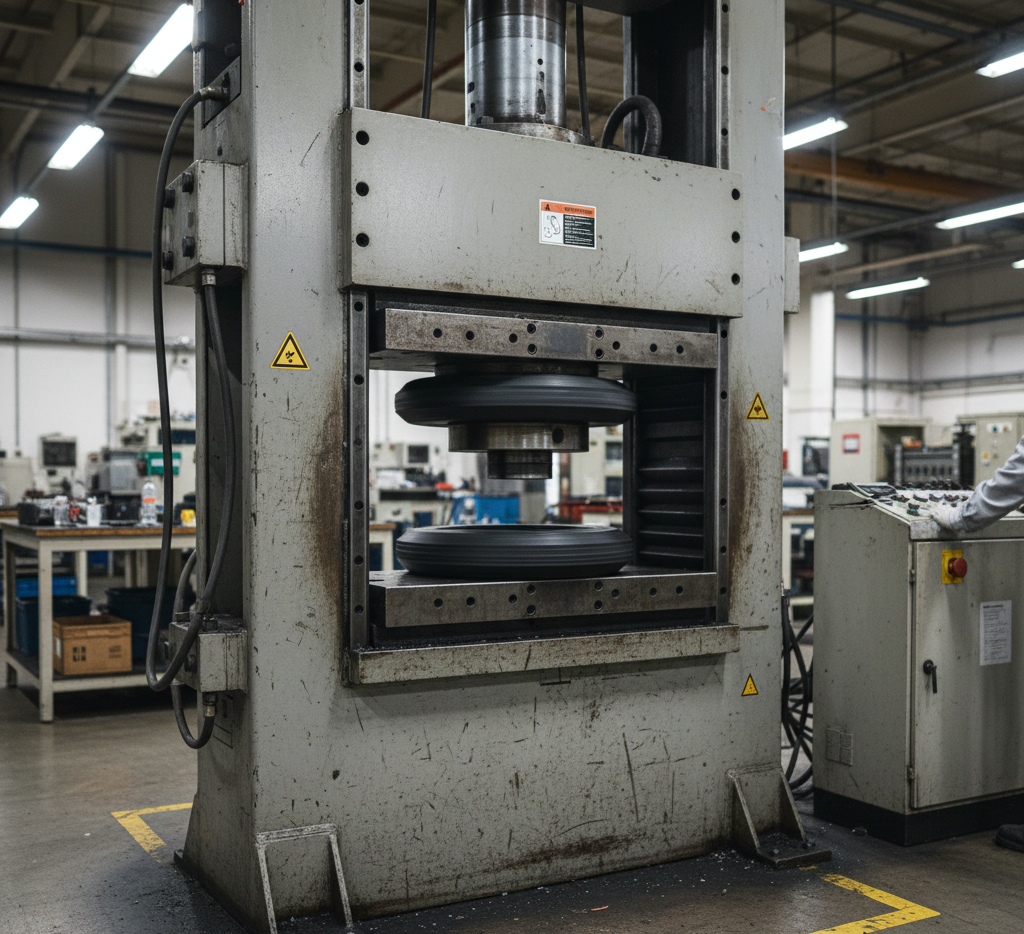
Set of Compression
Rubber is pressed for hours at very high temperatures.
Why it matters: Tells you if a seal or gasket will keep sealing or start leaking.
Strength and Stretching
The rubber is pulled till it cracks.
Why it matters: It shows how strong it is and when it will break.
Wear and tear
Rubbing or scratching the surface over and over.
Why this is important: This is important for pieces that are near sand, dust, or machines that are moving.
Heat shock
Samples are quickly moved from very hot to very cold.
Why this is important: Finds the answer to whether rubber breaks when the temperature changes quickly.
Tiredness that changes
Rubber is bent or stretched many thousands of times.
Why this is important: demonstrates the lifespan of flexible items like tubes or bellows during use.
These tests all give makers a better idea of how their rubber pieces perform in tough conditions.
How does Testing help you make products that are safer, better, and last longer?
The real benefit of better Testing is that it helps companies avoid loss, make better products, and choose the right materials from the start.
It helps you pick better materials
If a rubber mixture doesn’t pass a chemical test, experts can use materials that are more durable like EPDM, FKM, or NBR.
It helps prevent mishaps in the field.
Testing finds problem areas early, so concerns can be fixed prior to the good is made in large amounts.
3.This renders things more secure and reliable.
Rubber parts that you can trust will stop leaks, broken machines, and unanticipated delays.
It will eventually cost you less
It’s much cheaper to test than to break equipment, file warranty claims, or stop production.
It helps companies meet the standards of their industry
The oil and gas, construction, automotive, food processing, and manufacturing businesses all rely on strict rules. Testing checks that everything is up to standard.
It makes customers feel more sure
Customers believe your product’s performance after it has been tested in a lab.
How Testing stopped a real-world failure is a basic example
Think about a rubber seal that kept breaking every few months in an oil system that ran at high temperatures.
The lab found after further Testing:
It took in too much oil.
It got soft when it got hot.
It changed shape permanently when put under strain.
What is the answer? Change to a unique high-temperature rubber composition and a better curing procedure.
What happened?
The new seals lasted three times as long
Costs for maintenance went down
Less time was wasted
This is how Testing directly makes things work better, more reliably, and more satisfying for customers.
Why it matters to pick the proper rubber testing lab
A excellent lab doesn’t only run tests; it also helps you understand the data and make the proper choices.
Pick a lab that has:
ISO/IEC 17025 certification
Modern tools and advanced equipment
Testing experience in your field
Reports that are easy to read and comprehend
Testing that is tailored to your environment
Quick and dependable turnaround times
This makes sure that your results are correct, reliable, and helpful.
What to say to your lab before you test
To achieve the best results, tell:
The place where the product will be used
Range of temperatures
Chemicals it could come into touch with
Expected lifespan
Force, weight, or movement
Risks to safety
The lab can better copy real-world situations if they have more knowledge.
In the UAE and GCC, tough conditions call for greater Testing
There are several special problems in our area:
Very hot
Strong exposure to UV rays
A lot of moisture
Dust and sand
Strong chemicals used in industry
Marine and offshore settings
This makes it much more vital to do advanced rubber testing. Products need to be able to handle more than just normal world conditions, or they won’t last.
Conclusion
Testing keeps your brand, your product, and your customers safe.
It’s not merely a technical imperative to test rubber more thoroughly; it’s also a wise business move. It helps companies make items that are safe to use even in harsh environments and last a long time.
Advanced Testing gives you the following, whether you make seals, hoses, gaskets, rubber parts, or industrial parts: