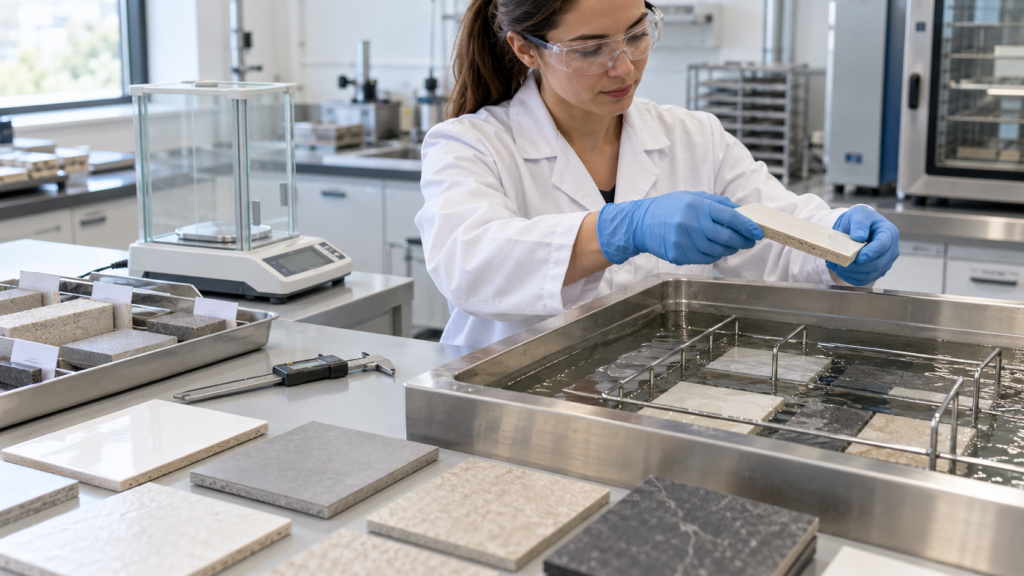
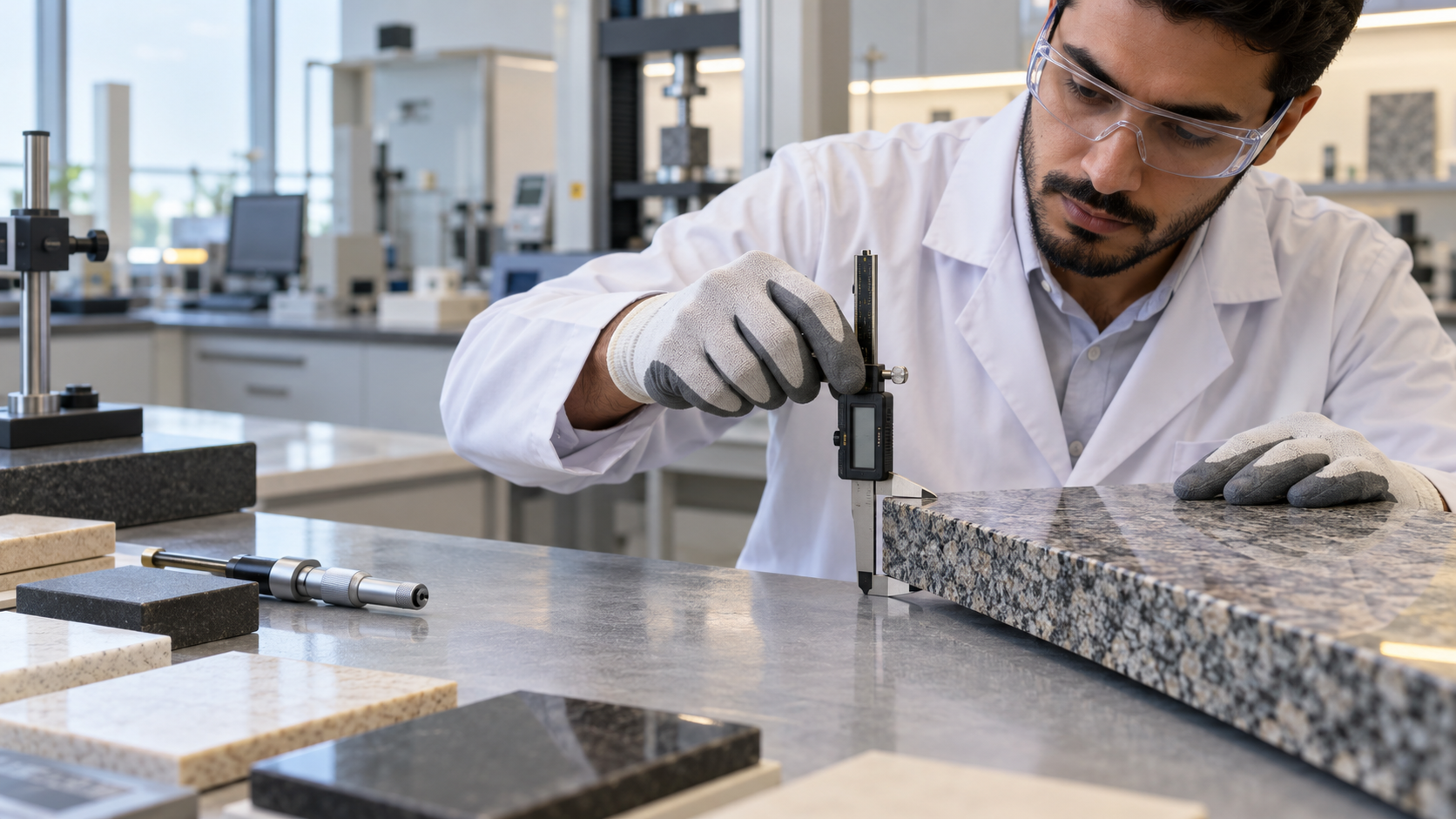
Tiles, marble, and granite can work better if you test them.
Tiles, marble, and granite are used in many places like homes, offices, hotels, shopping malls, and business places. Select the right ones, and they will look great on walls, floors, and tables for years to come. But it’s not always easy to choose the right stuff. A marble tile or piece that shines well or looks good in a store doesn’t always mean it’s a good one. Things don’t get hard enough, are too thick, soak up water, or have a bad finish on the outside. They can happen during construction of the building or after it is completed.
How do you know ahead of time that the things you are going to use are good?
Tests for tile, marble, and granite let you know how well they work and if they meet the goals of your project. Tests can help with all the things that can go wrong with quality.
Why should you make sure the items are good before putting them in?
It would be awful to put down a lovely floor only to find that some of the tiles are broken, not level, or don’t fit. It could cost more, take longer, and waste more to fix these issues. If you check the items before you put them in, these kinds of things are less likely to happen. Think about how the tiles in your bathroom and living room might be different. Stone that is used for floors may also need different care than stone that is used for art on the wall. It is important for builders, experts, and companies that sell building materials to do tests on the materials before they are used.
1. Cracks and weak spots on the surface
When you finish a room, broken or cracked stone and tiles can make it look bad. Cracks can show up while the thing is being shipped or put together. Sometimes the stuff might not be strong enough to do what it says it will do. For some jobs, the materials need to be strong enough to handle daily use or a certain amount of use.
Why are tests good?
Checking how strong something is is one way to find out how it responds to different forces. If the material is right, you might be able to test for either bending strength or compression strength.
It can help professionals figure out if the stuff is strong enough for the job.
2. Not being able to soak up water.
You should think about water when you choose tiles, marble, or quartz.
Look at the tiles in your kitchen, bathroom, or outside. These places may get wet a lot of the time. If the stuff isn’t right for the job, things could happen that cause water to leak.
Before you choose, you need to know how each one soaks up water.
Why are tests good?
If you want to learn about how much water an object can hold, you can do a water absorption test.
Read it, and you can decide if the info is good enough for the job.
3. Tiles or stones that aren’t all the same size
Have you ever seen floor tiles that don’t fit together or have gaps? It’s difficult to lay different sizes or thick tiles.
The finished surface may need further time to be repaired by the builders, to replace the materials, or to cut the tiles.
Why are tests useful?
Check the sizes of tiles and other stone items to ensure they are the right length, width, and other sizes.
You should read this before you do the job, to help you plan it and find mistakes quicker.
4. Marks, chips, and rough edges
Quartz and marble look good, so people like them. Tiles also come in a lot of different shapes, colours, and finishes.
But the look of a finished project can be affected by defects that are visible, such as cracks, chips, scratches, and mismatched finishes.
This kind of stuff is most common in places that care about how they look: hotel lobbies, office waiting rooms, shopping malls, etc.
Why test and verification?
You can examine for cracks or damage before laying the surface.
This allows them to pre-test and repair items before launch.
6. What separates each group of things?
Stone or tiles may be sent more than once for a big building job. In terms of size, shape, look, or other things, the elements might not always be the same.
It can be hard to make the building look like a whole because these parts are different.
Why are tests good?
You can tell if the materials meet the needs by looking at and testing pieces that are typical of the whole. If you put samples from different deliveries next to each other, you might find differences that need more research.
This is very useful for jobs that need things of the same quality.
What Kinds of Tests Are There?
What it is, how it will be used, and the needs of the project will determine the best way to test it.
To check and make sure, people often do the following:
Things can hold a certain amount of water if you test them for that.
When you bend something, flexural strength tests check how strong it is.
The compression strength test checks how well something can stand up to being pressed down.
When you look at something, you measure it to see how big and thick it is.
The abrasion resistance test checks how well something keeps the surface in good shape.
First, look at it. This will help you find cracks, chips, and other flaws that are easy to see.
Some things don’t need all of these checks. They should be picked based on the needs of the project and any rules that are in place.
When should you look over your things?
People should try it before something happens. Before you buy something, make sure it works.
You should look at the things to make sure they are good before you put them down.
Make sure you do the right checks on the materials before you start building to make sure they are always of good quality.
If you are not sure how well the material works, trying it might help you work that out.
You won’t have to do the same work twice if you take these early steps.
Lastly :
Marble, granite, and tiles can still beautify any place. They are more important for how they are made than how they look. Things that aren’t made for the job can crack, soak up water, be the wrong size, have flaws on the surface, and wear down over time. Place them and see how good the things are. This will help you make better long-term decisions and avoid potential problems during construction. Materials pre-use inspection can save time, reduce waste, and improve the job.
In the UAE, would you like to try stone, marble, or brick?
Think about how good the materials you use to build will be. At Falcon Lab UAE, we can provide you with the tests you require for tile, marble, and granite. Learn more about what we do: Visit our website or contact us to find out more.