How to Use Geophysical Testing to Find Hidden Ground Risks Early
When we look at a building site, everything might look fine at first glance. The ground seems solid, the spot is great, and plans are moving forward. There are, however, many bigger problems with building that we can’t see. These problems are found underground.
That’s where geological testing really shines
What's Wrong with "What You Can't See"
It’s easy to think that the ground will behave as expected before building starts. Sadly, conditions underground don’t always match what people think they are. A simple job can become stressful and expensive because of things like weak soil, holes in the ground, shallow rock, or groundwater that you didn’t expect.
When these issues are found too late, they often lead to:
Quick changes to the style
Costs going up
Holdups and delays
Risks to worker safety
The good news? It is possible to find most of these problems early on, before they get worse
Explain what geophysical testing is in simple terms
Before you start building, geophysical testing is like giving your spot a health check-up.
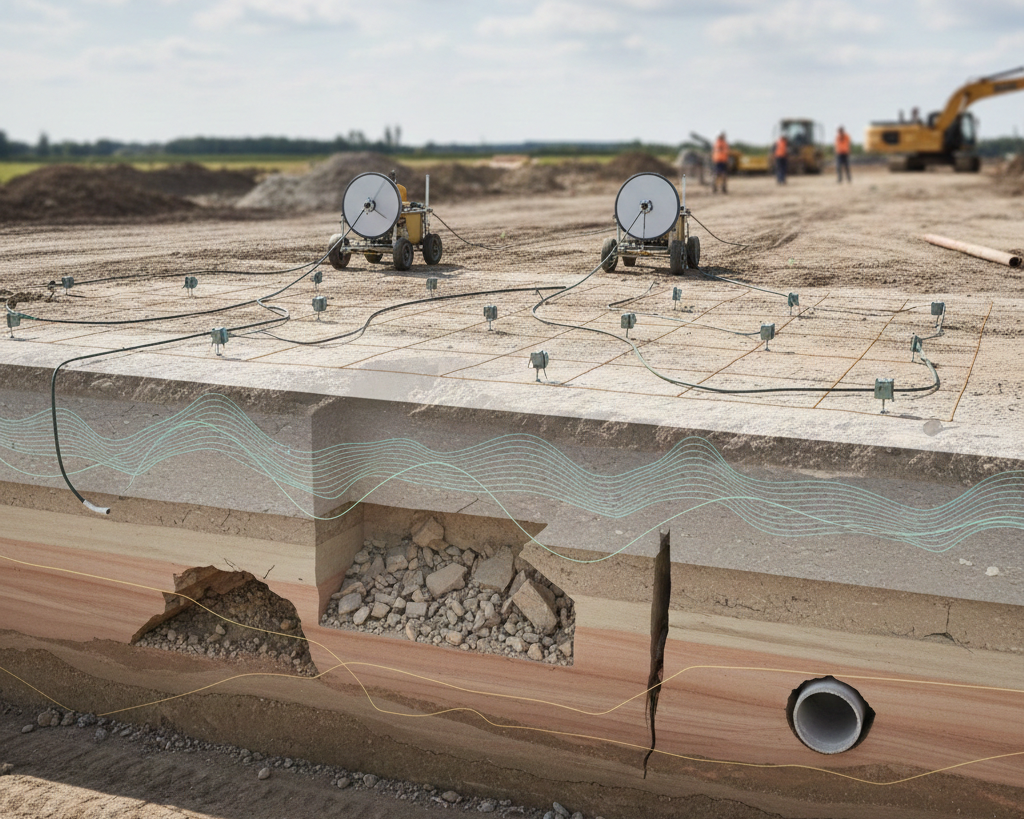
To “scan” the ground, instead of digging everywhere, special tools are used. With these tools, you can send signals into the ground and read back what it does. With that knowledge, experts can figure out what’s below the surface without having to mess with the site.
Don’t guess. No digging that isn’t needed
How geophysical testing can help you find hidden risks early
It finds weak spots before they hurt people.
There are layers of soil that are just not strong enough to hold up houses. Geophysical research helps find these weak spots early on, so the foundations can be built correctly from the start.
Voids and hidden holes are found.
When there are empty spaces beneath, the ground can suddenly fall apart. If found late, these are dangerous and cost a lot of money. Before building starts, geophysical surveys help find them.
It really shows where the bedrock is
Engineers can make better and more cost-effective foundations when they know how deep solid rock is. Testing with geophysics gets a more complete picture than just drilling.
It warns about problems with groundwater.
Below the surface, water can weaken the ground and fill holes that have been dug. Finding problems early on helps teams better plan how to drain and build.
Why beginning this early will save you time and money
It is always easier and less expensive to find problems early on than to fix them later.
When geological testing is done before the project starts:
Fewer unexpected things happen with projects.
The designs are more precise.
Building goes according to plan.
The costs are still under control.
Knowing things early on helps you make better choices.
A Smarter Way to Look into the Ground
In the old way of drilling, you could only tell what was going on in a few places. Geophysical testing looks at a lot more ground, so it gives a more complete picture of the spot.
An engineer gets the best of both worlds when they use both ways together:
A lot of press
More information
Less danger
It is a smarter and more effective way to investigate on the ground.
Last Thought
There’s often more going on below the surface than we think. The ground may look calm and safe. Geophysical testing can help find hidden risks early on, so projects can begin with trust instead of doubt.
Do some research below the surface before you start building. It will help you avoid surprises, make the roots stronger, and make the building process go more smoothly.